The Stranger Choice Piece Artist's Statement
Summary:
Breaking down my Stranger PMV, art process, and artist's statement.
Notes:
The amazing original song: Dull!! by 飽海
For some of the frames, I traced either stock photos or the graphic novel illustrated by Jacques Ferrandez because my art skill simply wasn't at the level to be able to crank out that many original drawings. (I made the whole thing in like 2 weeks.) One of the frames is traced from the original MV made by WOOMA. This is why I have the video set as unlisted. I'd like to remake it one day.
Introduction
I really enjoyed The Stranger and I especially love the character of Meursault. I felt compelled to do this book justice so I decided to go all out and make an illustrated music video*. (See the end for a note on terminology.) The MV tells the story of The Stranger from Meursaultʼs perspective in a somewhat chronological order, mainly focusing on his life before the incident. Following the climax of the music, time skips to after Meursault has been convicted and is awaiting his execution. My design of Meursault is a synthesis of his character from The Stranger: The Graphic Novel illustrated by Jacques Ferrandez and The Stranger (1967) movie directed by Luchino Visconti, with Marcello Mastroianni as Meursault, as well as my own headcanons (DOK Level 4). I gave him long hair because I think he doesnʼt care about his appearance enough to get his hair cut often (i.e., he thinks itʼs too much of a hassle). Or maybe I just have a soft spot for fictional guys with long hair… Recalling that Meursault doesnʼt seem to express any intense emotions and is generally apathetic, I decided that his default expression would be a deadpan face (think neutral emoji 😐) (DOK Level 1). This is why throughout the MV, he pretty much has one expression: bored and unconcerned. I chose the song Dull!! by Akumi because 1) the original MV by WOOMA is gorgeous, 2) I really like the song and knew I would have to pick something I wouldnʼt mind listening to 100 times over the course of drawing and editing, and 3) the lyrics scream Meursault and absurdism (for the lyrics I used the English translation by Dewcreek). Blending elements of the original work, the music, and absurdism, this MV is my original interpretation of how Meursault sees the world and himself (DOK Level 4).
Design Process
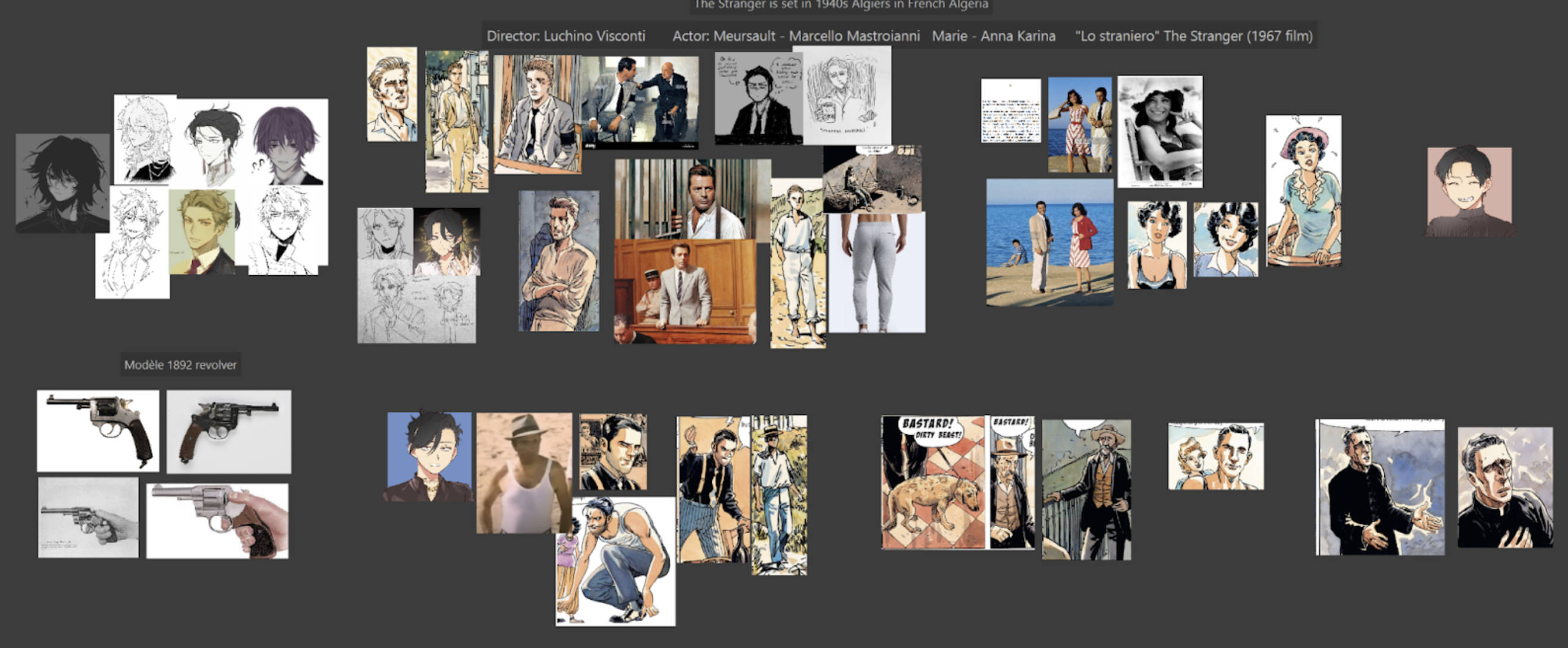
The first thing I did was to gather plenty of reference images for inspiration and character design. I also did a bit of research on what gun Raymond wouldʼve possessed and settled down on a Modèle 1892 revolver, seeing it was a French revolver used all the way to the mid-1960s.
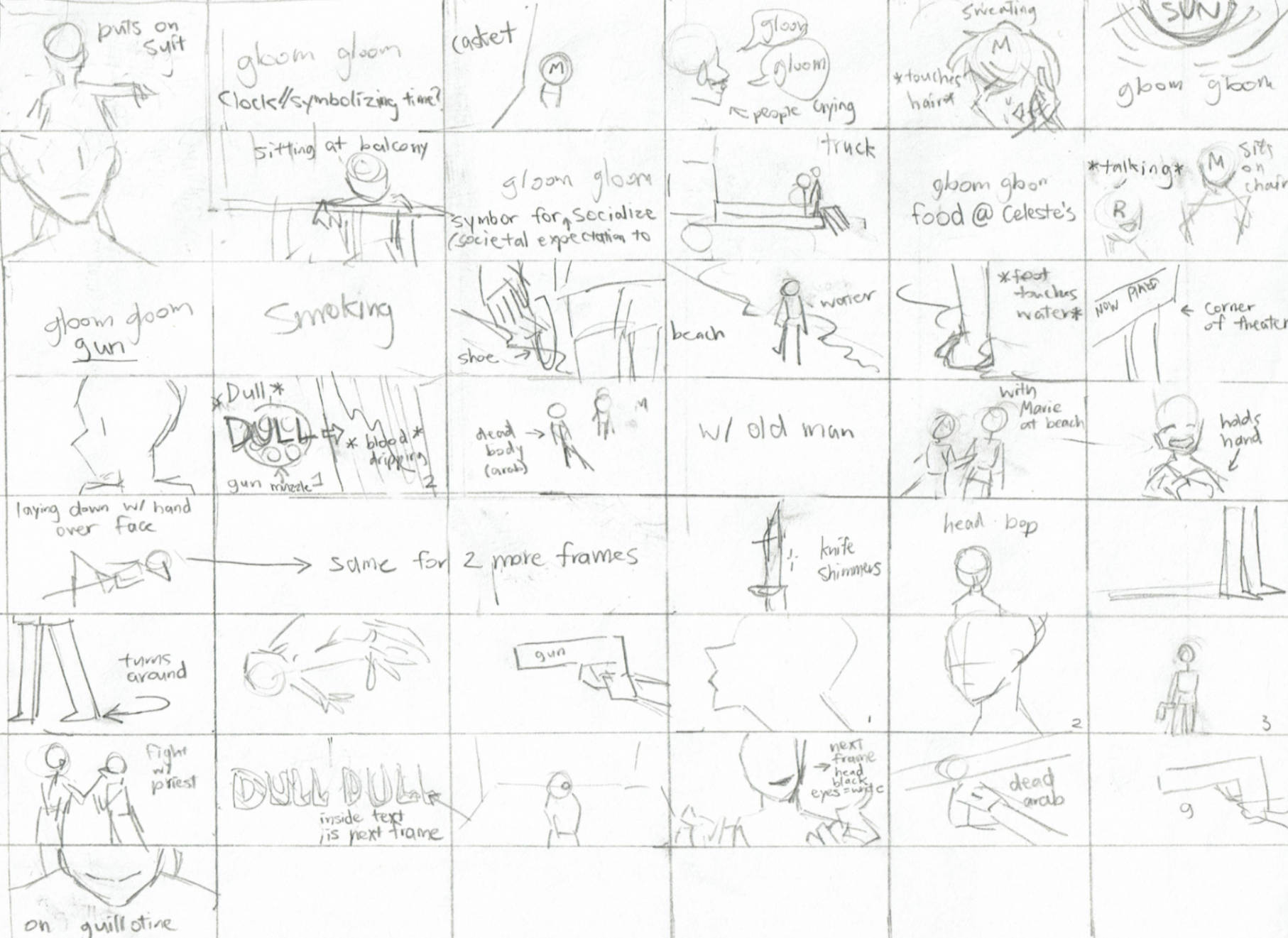
The foundation of an animated/illustrated MV is the thumbnail sketches/storyboard. To create the thumbnails, I listened to the music and sketched the scenes that popped into my head.
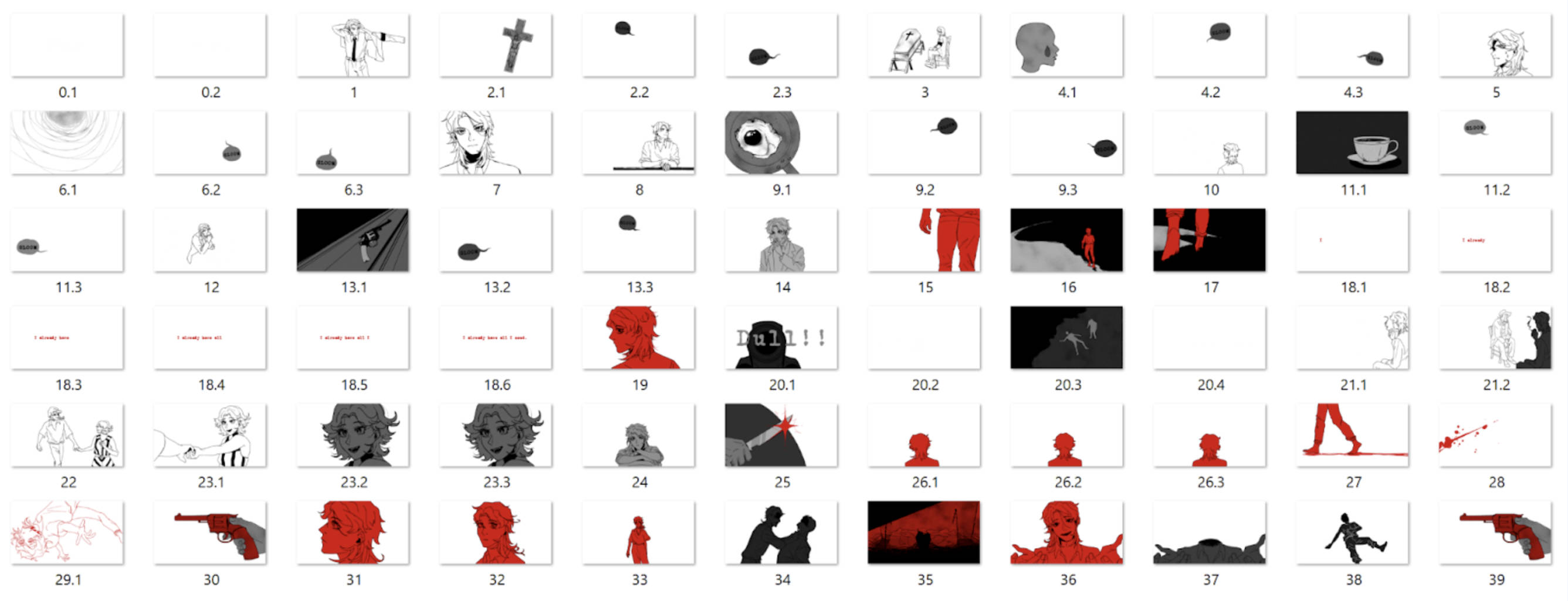
The next step was converting the sketches to more refined sketches, and then turning the sketches into the final artwork.
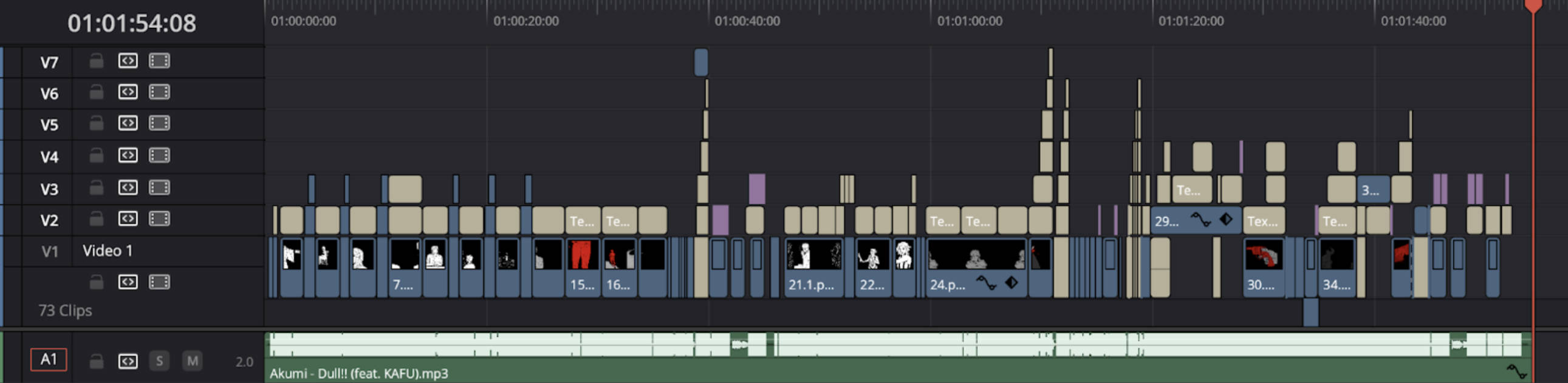
And finally, the editing. My MV is essentially a mimic of the original MV; the timing, lyrics, and art style are all heavily inspired by/based on the original. Originally I was gonna do some simple editing, but I got carried away and ended up animating the images using the transform and keyframe tool and slapping on a bunch of effects. My final editing timeline looked like this:
A Breakdown of the MV

Just like the book, the MV opens with a scene of Meursault attending his motherʼs funeral. The lyrics “A pop quiz I wasnʼt ready for” resonate with Meursault being in “something of a rush,” having to borrow Emmanueʼs “black tie and mourning band” “at the last moment.” Heʼs not prepared for the death of his mother, not in the sense that heʼs not ready to lose a loved one, but unprepared for the hassle that would follow suit. A crying face pops up on the screen along with the sound of “Gloom, Gloom,” symbolizing the societal norm to cry at the death of a (perceived) loved oneʼs funeral. Meursaultʼs behavior promptly defies this expectation, for which he was accused of being a “criminal at heart” who didnʼt “weep at his motherʼs funeral.” Our physical behavior, such as crying, is often a reflection of intense emotion. But Meursault did not feel intensely disturbed or upset by his motherʼs death, so he simply did not cry.

On his way to the church, under the “full glare of the morning sun,” Meursault begins to perspire. Radial blurring is applied to the sun (center image) to represent haze and blurry vision caused by intense heat. Besides Meursault himself, the sun is the real antagonist here. He seems to lose his rational, collected self quite a lot under the scorching sun. Meursault also finds all of this to be quite a hassle, and would probably much rather be sleeping in his bed.
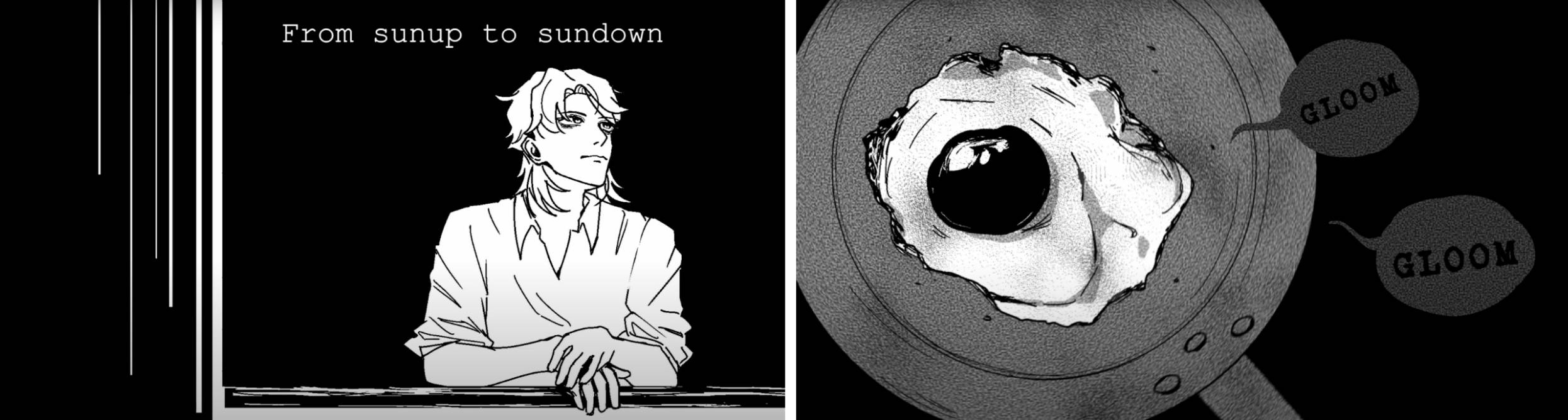
The Sunday after the funeral, Meursault, with nothing “better to do”, goes out to the balcony and watches people on the street from sunup to sundown. He also spends time “watching the sky for quite a while.” But before that, he cooks himself breakfast—“some eggs”—since he doesnʼt want to have lunch at Célesteʼs restaurant and be “[pestered] with questions.”
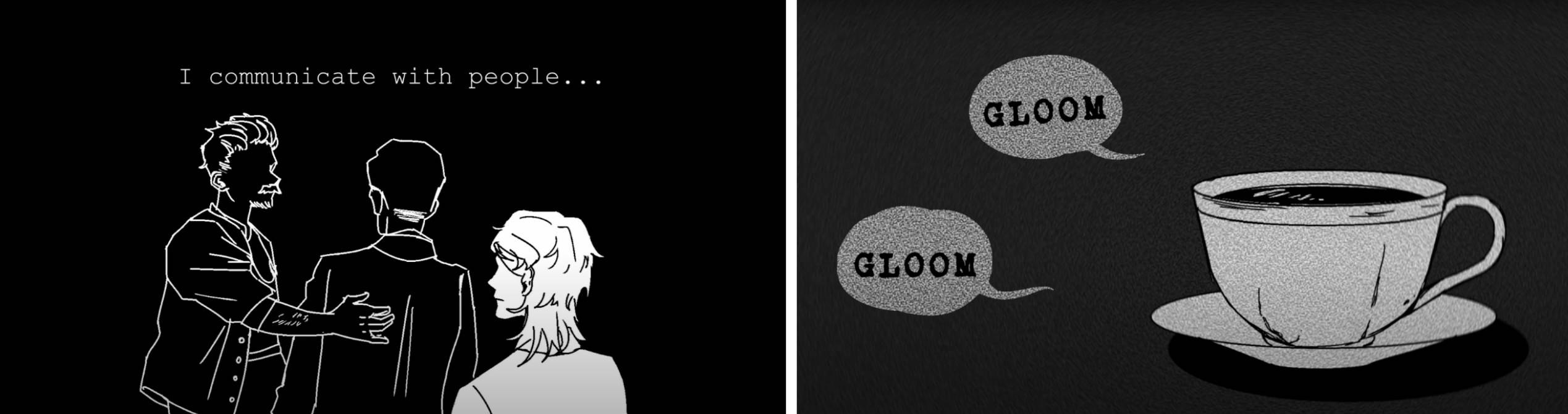
Celeste and Emmanuel are arguably the two people Meursault is the closest to (or has the most interaction with on a daily basis), and yet he never addresses them as friends. He refers to Emmanuel as the one “who works in the Forwarding Department” and calls Celeste “pal” but in a sort of sarcastic way: “What did it matter if Raymond was as much my pal as Céleste, who was a far worthier man?” Meursault doesnʼt make friends; he merely communicates with people. Just as he doesnʼt much like “café au lait” (coffee with hot milk) but will drink if offered it, he doesnʼt go out of his way to seek friendships but will accept company or acquaintances if circumstances lead to frequent interactions.
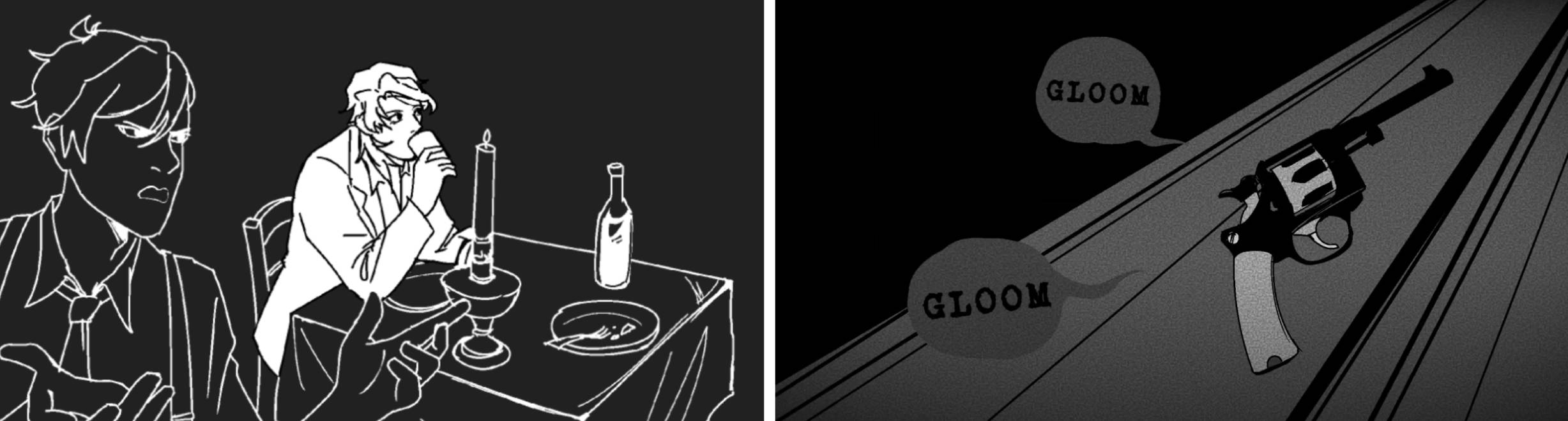
As Raymond goes on a rant about how he thinks his girlfriend is cheating on him and plans to get revenge, Meursault “just listened, without speaking.” In my illustration, Meursault drinks the wine and appears unconcerned—because he is. The ongoing domestic violence doesnʼt seem to bother him one bit, as from his perspective, it doesnʼt affect him whatsoever. He even comments that he “hadnʼt any [opinion], but [heʼd] found [the situation] interesting.” Meursault doesnʼt have strong opinions on anything at all, and it is this indifference to the world that contributes to his downfall. Raymondʼs gun will also play an important role soon…
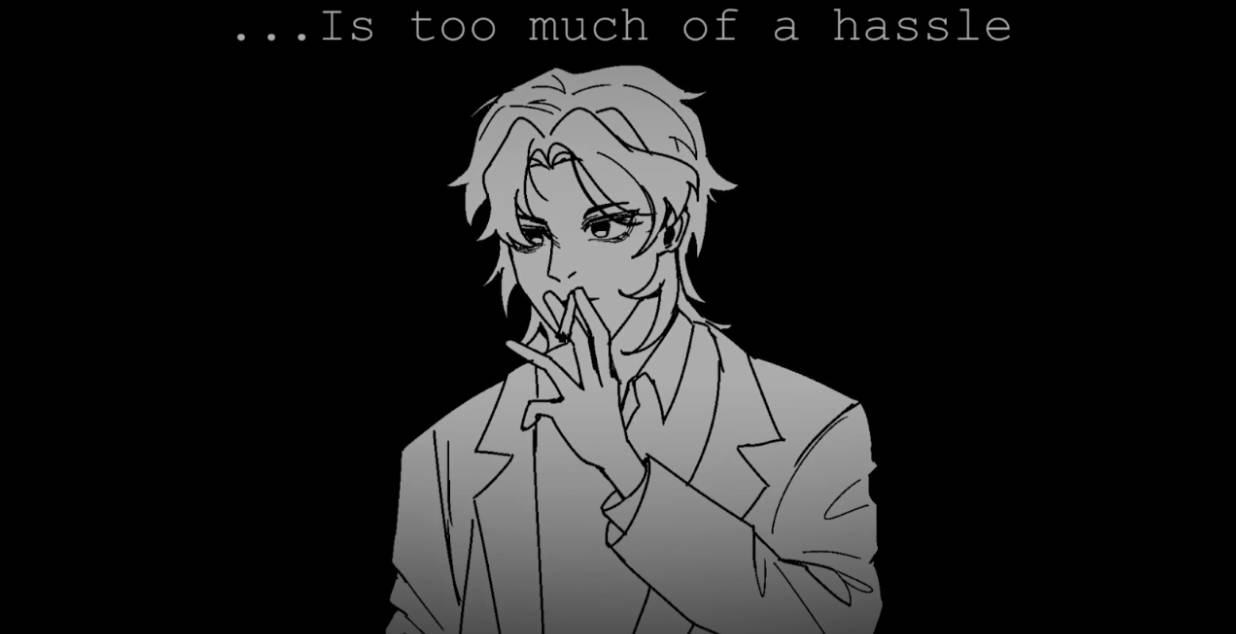
The lyrics “My mere existence is too much of a hassle” pretty much describe Meursaultʼs personality. In his own words, “Itʼs common knowledge that life isn't worth living, anyhow.”
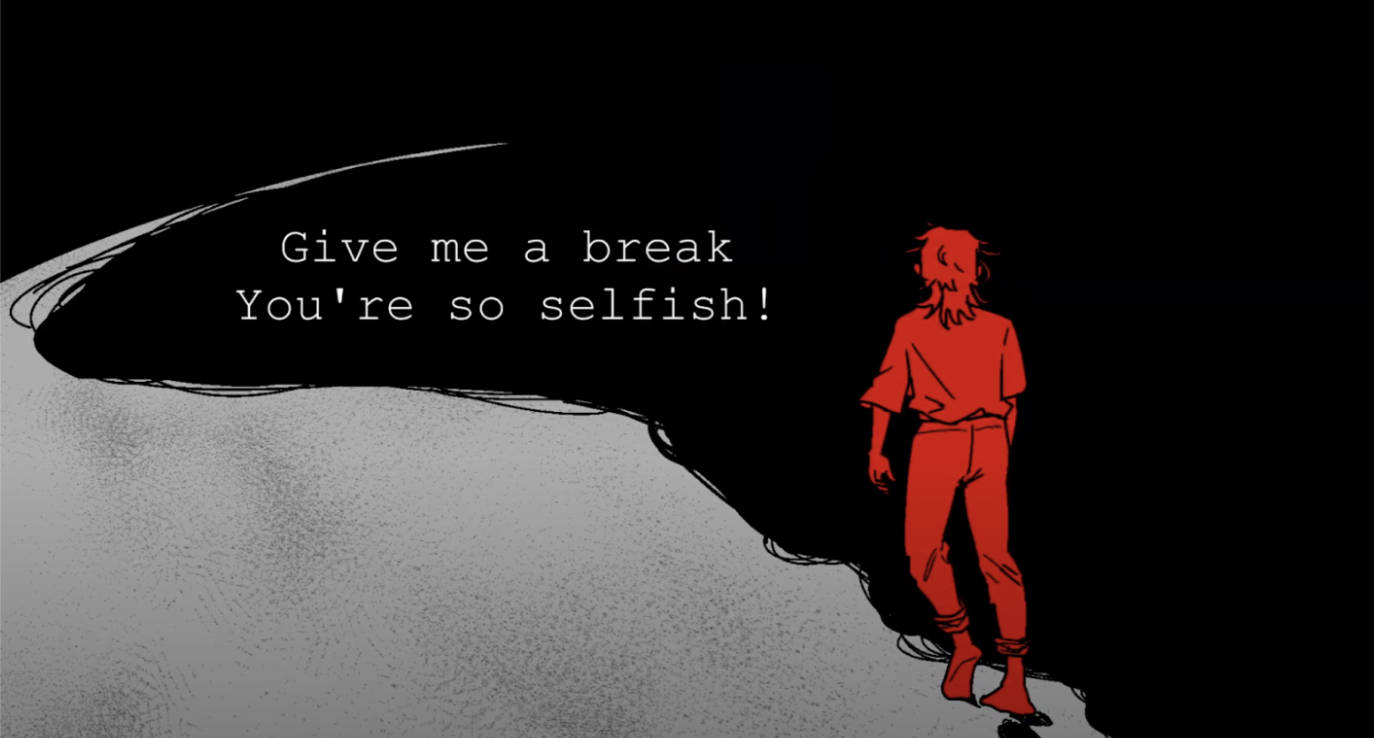
Meursault doesnʼt mind interacting with people, as evidenced by his frequent lunches with Emmanuel at Celesteʼs restaurant, as well as his desire to be with Marie (in every sense of the word except romantically, apparently). But he also quite often needs his personal space—a break from social interactions. One example that comes to mind is when he decides “not to lunch at Célesteʼs restaurant” the day after his motherʼs death, as he does not want to be pestered with questions; he “dislike[s] being questioned.” Heʼs a quiet, unassuming type of guy who will not reveal anything about his personal life unless prompted. In other words, privacy is important to him.

“I already have all I need.”
Meursault “lacked ambition” in work, showing no interest in a promotion. Heʼs fine with living in a single bedroom—he says his flat was “too large” after his motherʼs death so the “only room” he uses is his bedroom—and doesnʼt bother taking care of it. Heʼs already got all he needs in life! In the absurdist interpretation, life is fulfilling enough just by simply being alive. All Meursault ever wanted was “A life in which [he] can remember this life on earth.” He doesnʼt care about the “what ifs” that he knows are infinite and instead focuses on the present moment. This is very much adhering to the absurdist philosophy of how the search for the meaning of life (which does not exist) will only result in conflict. Meursault copes with this by simply living until the inevitable end—death.
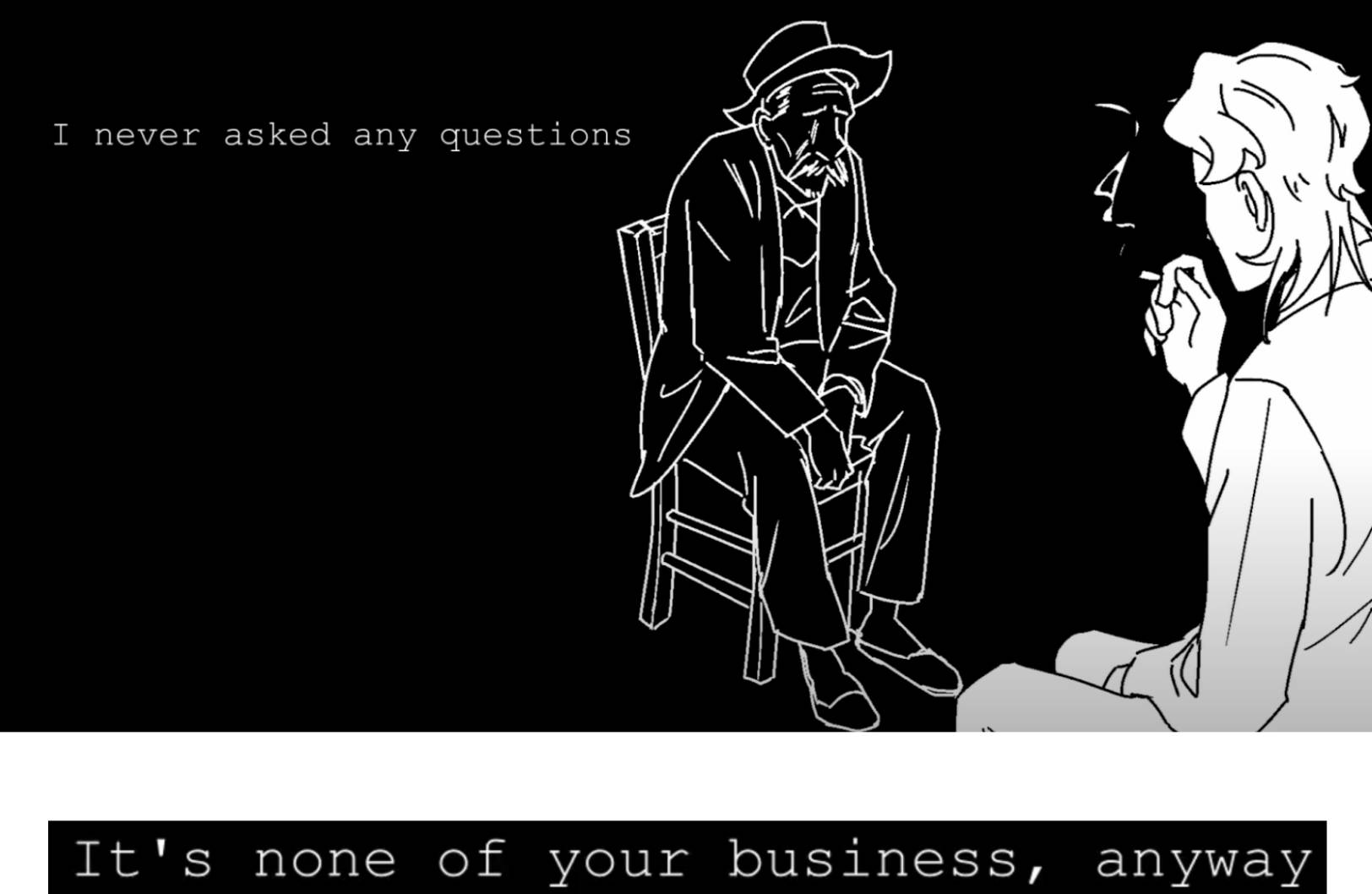
Meursault doesnʼt ask any questions—at least not any real ones that will allow him to form a deeper connection with someone. When the old man confides in Meursault about his lost dog, he opens up and puts himself in a vulnerable position. A common or courteous response would be to sympathize/empathize, opening the opportunities for a meaningful friendship. And what does Meursault do? He asks the old man “some questions about his dog.” Okay, that seems promising. Heʼs trying to socialize, right? Except he actually“found [the old man] rather boring” and the only reason he even asks questions is because he is bored and has nothing better to do. Again, Meursault isnʼt interested in making friends, and he is even less interested in revealing vulnerable information about himself.
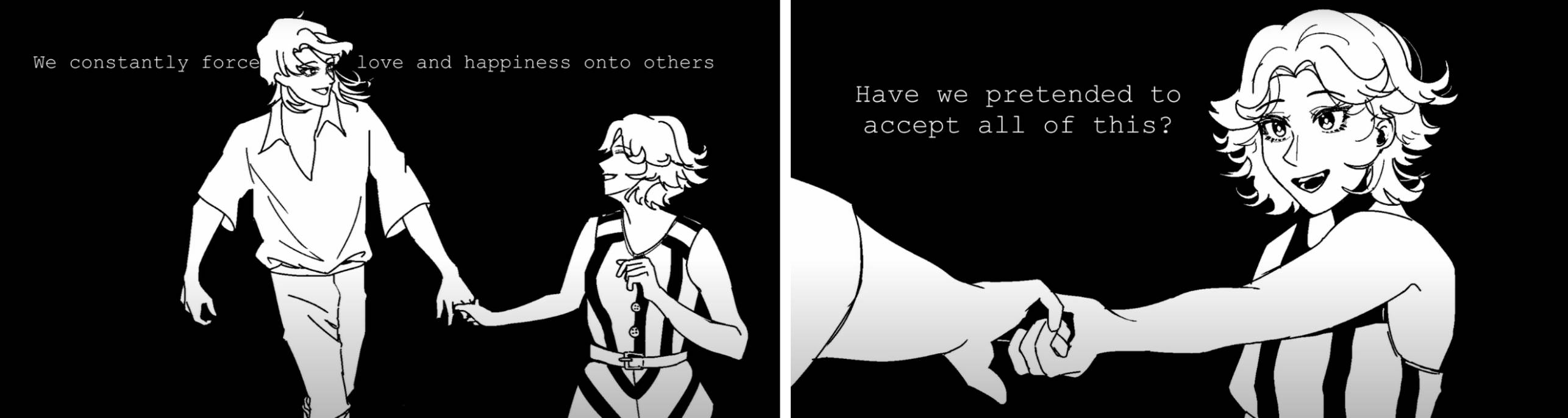
Iʼd like to clarify that this paragraph is less about analyzing the original text, but more so exploring my interpretation of Meursaultʼs worldview (and how it aligns with my own to some extent), and how it fits in the context of the lyrics. I knew I had to include Marie somewhere in this MV, and thereʼs nothing more fitting than the lyrics that mention “love.” The lyrics here remind me of amatonormativity—societal assumptions that everyone desires and prospers with an exclusive romantic, sexual relationship, and that such a relationship is inherently more valuable than other kinds of relationships. We are forced to love, because doesnʼt everyone do that? Love is a performance; there are certain expectations on how one ought to express romantic love, such as buying thoughtful gifts on Valentineʼs Day or through physical contact (whether itʼs sexual or not). People display affection through romantic gestures, but who decides what is romantic anyway? Meursault and Marie certainly do not have a typical romantic relationship, but that doesnʼt make it bad or unhealthy. “Love Makes You Dumb” and do irrational things seems to be the consensus. Huh.
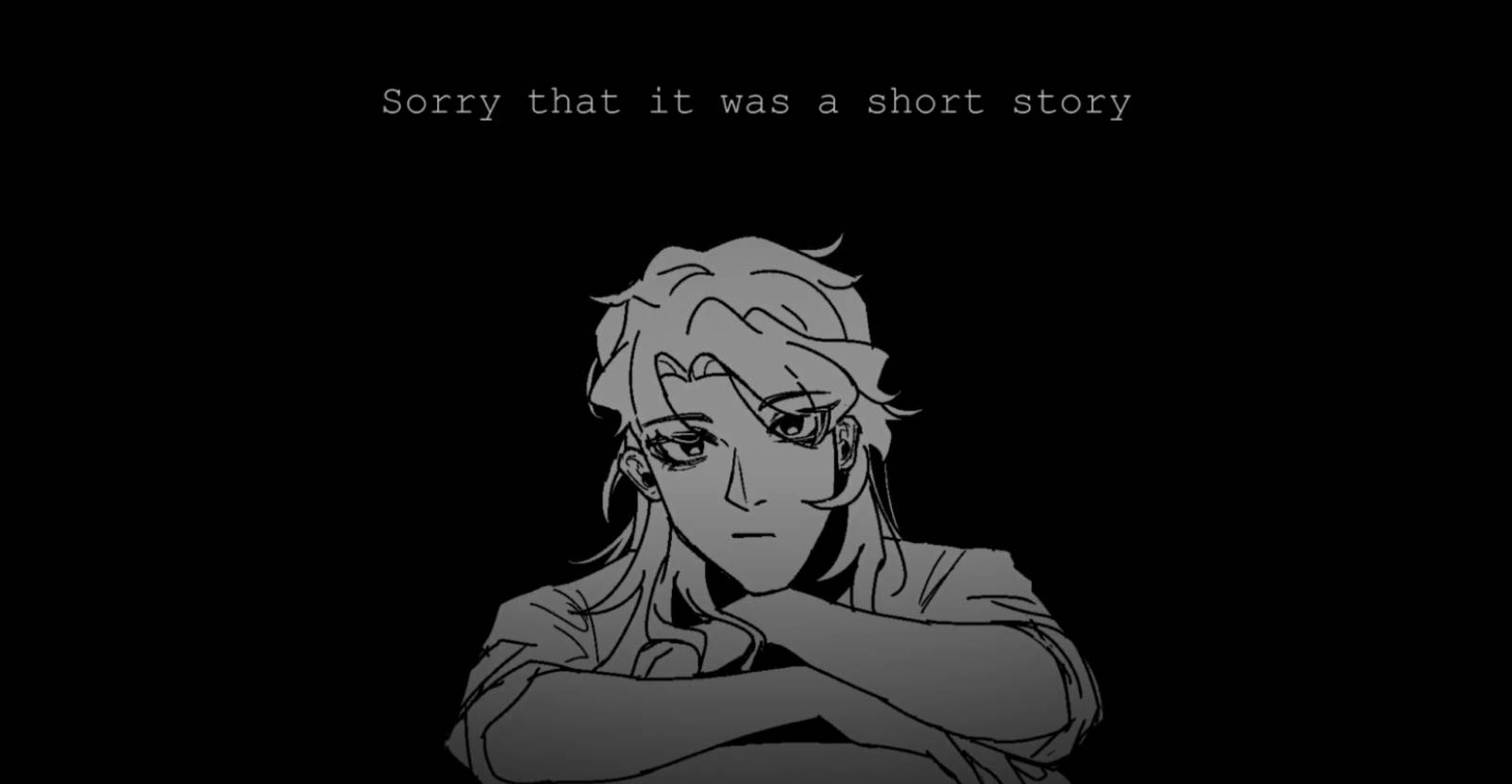
The Stranger is, in fact, a rather short story, clocking in at around 30,000 words. Sorry that Meursaultʼs life isnʼt long enough or entertaining enough.
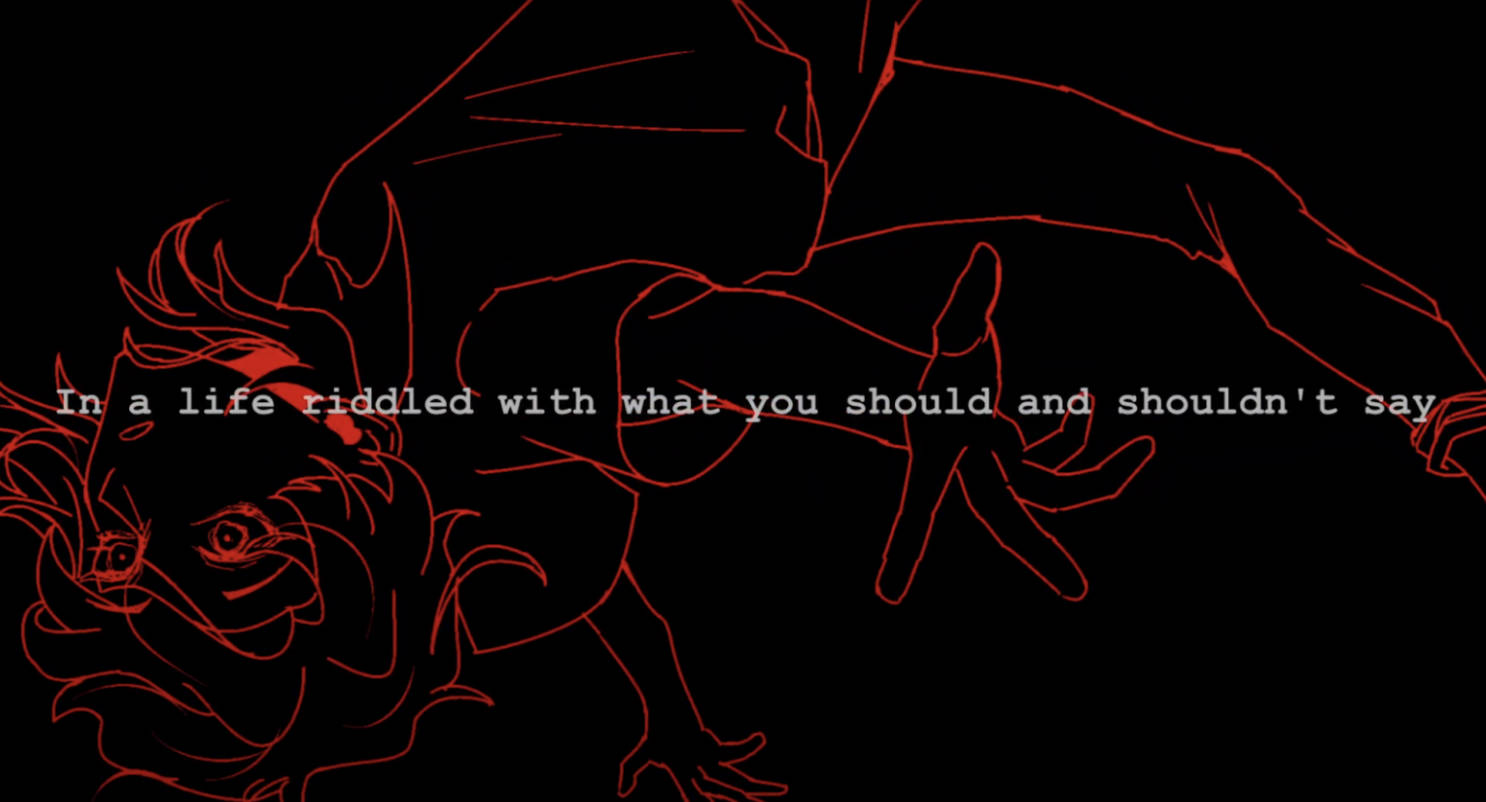
Life is riddled with what you should and shouldnʼt do. Society has a set of morals and rules that everyone is expected to follow (and the majority do follow them). One said rule is to refuse offers for food while in mourning “out of respect for the dead,” which Meursault promptly defies. He is the outlier here. You can even say he is a stranger in the eyes of society. He is aware of them but chooses not to follow them because he thinks they are arbitrary rules that donʼt mean anything. He is following the absurdist principle of living without appeal. And what does he gain out of all this? “A debt owed to society” paid in the form of a death sentence.
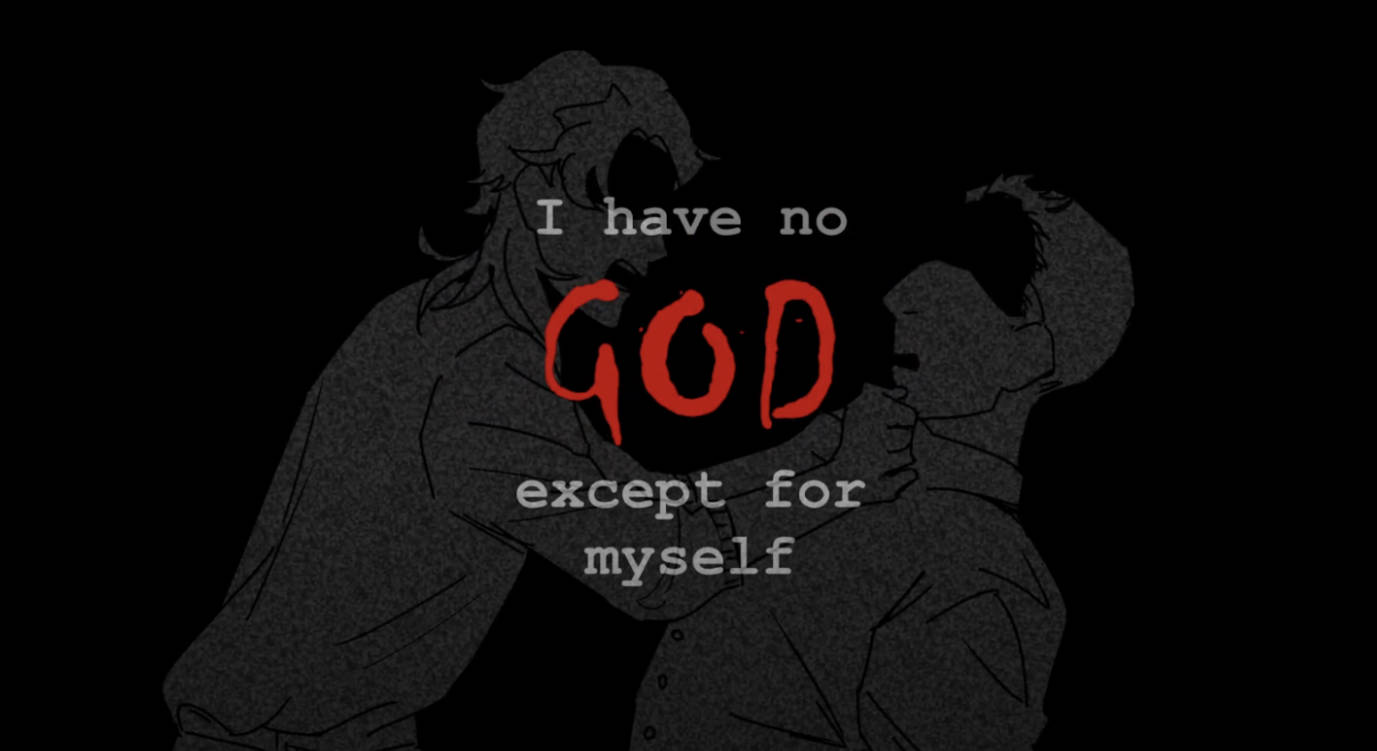
Meursault is an atheist, and the lyrics “I have no God except for myself” sums up his belief perfectly. He doesnʼt believe in sin or fate, and is “sure of himself, sure about everything.” So, when the chaplain insists Meursault become a believer, he snaps, grabbing the chaplain by the “neckband” and “[hurling] insults at him.”
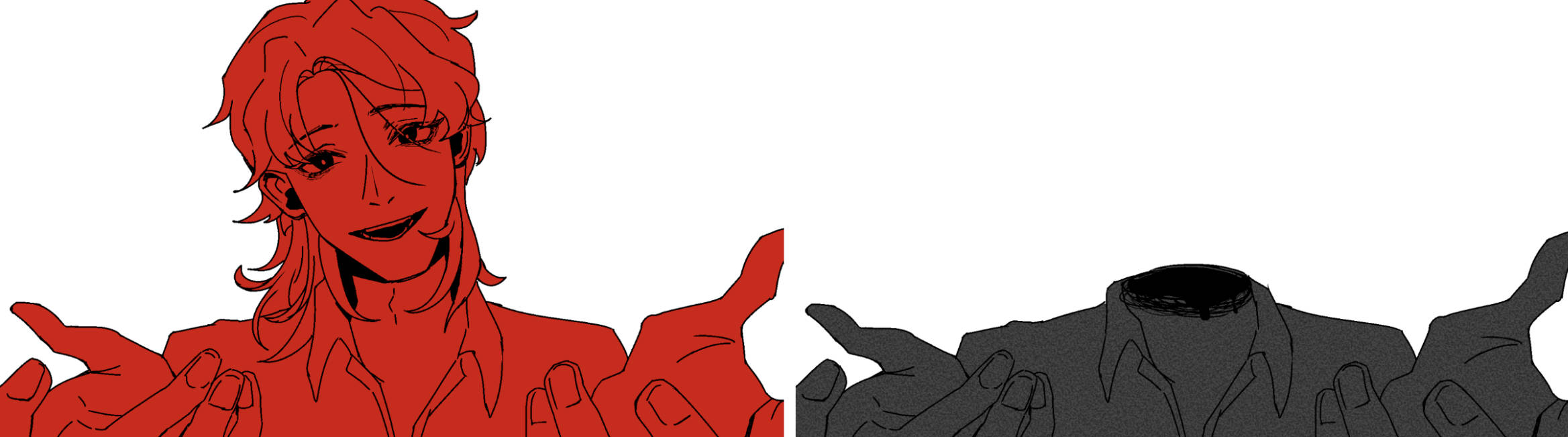
Finally, Meursaultʼs story ends with his decapitation by the guillotine, hence the missing head (right image). However, right before the execution, he becomes enlightened. He opens his heart to the “indifference of the universe” and for the first time, he “realize[s] that [heʼd] been happy, and that [he is] happy still.” Meursault greets his death with a smile because death doesnʼt mean anything, anyway.
A Few More Thoughts and Conclusion
Through this choice piece, I developed a greater understanding of Meursualtʼs character. The Arab didn't deserve to die, and it was unjustified for Meursault to kill him. And no, “it was the sun that made me do it” is not a good excuse, even if itʼs genuinely what he believed happened. Not to mention that his apathy also resulted in someone getting hurt (Raymondʼs girlfriend). That said, I donʼt think Meursault is an evil person. If he had chosen to stay in the bungalow instead of going back to the beach, then heʼd probably continue to be his unconcerned, unambitious self for the rest of his boring life. Personally, I donʼt see anything wrong with that. Everyone's a little odd. Itʼs okay if some are more unconventional than others. If I were to describe Meursaultʼs personality in one word, itʼd be “unconcerned.” In this Artistʼs Statement, I supported this interpretation by analyzing the original book and using textual evidence to justify my creative decisions, which connects with the ESLO Skilled Problem Solver. This was the first proper MV I made and it took over 50 hours in total. Through this project, I learned a lot more about editing using DaVinci Resolve, thereby making me a Technologically Literate Researcher who used digital technology to design creative artwork. Iʼm still amazed that I never lost motivation during the making of this MV. My love for Meursault is what kept me going honestly. My takeaway from this choice piece is that the want and need to see your favorite character, combined with the lack of fan art, provides great motivation, sometimes surprising results, and a deeper appreciation for the source material.
Oh, and by the way, be a stranger if thatʼs what your heart desires—just make sure your behavior doesnʼt cause harm to others.
*Note
I hesitate calling this choice piece an animation because, well, there isnʼt really any animation except for 3 frames. An animatic is more of a rough-sketch-storyboard style, which this MV is not. PV (promotional video) is the best phrase to describe it—itʼs a term mainly used in Japanese media (especially Vocaloid/vocal synthesizers culture), but the meaning doesnʼt translate well in the English-speaking side of things. All this is to say that I canʼt find a good phrase to describe this choice piece, so Iʼll have to go with MV.